The Mirror Across Time: A Story of Generational Myopia
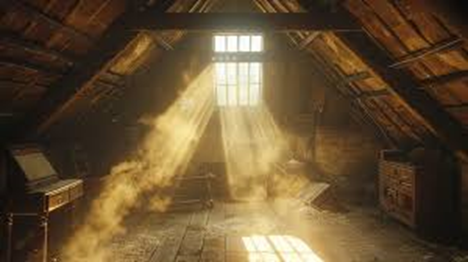
Chapter 1: The Old Chest in the Attic
It began with an old chest. Dust-covered and locked with a rusted latch, it had sat undisturbed in the attic of Aryan’s ancestral home for nearly a century. Aryan, a 28-year-old tech consultant from Kathmandu, had returned home during the pandemic lockdown. One afternoon, bored and disconnected from digital noise, he decided to explore the attic where forgotten relics of time slumbered.
Inside the chest, Aryan found handwritten journals, yellowed photographs, and a set of brittle newspapers from 1948. As he flipped through a journal marked “Prakash Neupane,” the name of his great-grandfather, he began a journey into the mind of a man born in a different Nepal, in a different world.
Chapter 2: A Mind Through a Window
Suddenly, a chill ran down Aryan’s spine. What if I am blind too?
Prakash’s journal wasn’t just a diary; it was a mirror. His entries detailed a world ruled by hierarchy, discipline, and honor. He believed in obedience, that emotions should be hidden, that a man’s worth was measured by his sacrifice, not his dreams. Aryan was startled. “How could he believe this was right?” he murmured.
But the more Aryan read, the more he saw a pattern. Prakash didn’t question the values of his era. He couldn’t see beyond them. Like a fish unaware of water, he swam in the beliefs of his generation.
Chapter 3: The Illusion of Enlightenment
Aryan believed he was part of an enlightened generation. He championed individual freedom, mental health awareness, and digital innovation. But was this clarity or another kind of blindness? The 2020s had their own dogmas – the gospel of hustle culture, the tyranny of social validation, the addiction to speed and convenience.
He remembered his heated argument with his father, who had warned him, “You’re always chasing what’s trending, not what’s lasting.” Aryan had dismissed it as old-school thinking.
But now he saw it: every generation lives in an echo chamber of its own making.
Chapter 4: The Ghosts of Culture
Aryan dug deeper. He read about the 1950s when his grandfather believed a stable government was more important than freedom. The 1970s when his uncle joined protests against monarchy, only to later regret the chaos of democracy. The 2000s, when his mother warned against posting too much online, calling it “emotional exhibitionism.”
These weren’t just differences of opinion. They were cultural programming.
He saw his own generation’s addiction to self-image, its obsession with disruption, and how it judged the past with arrogance and the future with fear.
“We see the world not as it is, but as our generation teaches us to see it.”
Chapter 5: A Letter to the Future
Inspired by the journals, Aryan started writing a letter. Not to anyone in particular, but to the future. He wrote about the strengths of his generation: empathy, awareness, global thinking. But he also admitted its weaknesses: impatience, conformity disguised as rebellion, and spiritual emptiness beneath digital wealth.
He ended it with a question: “Will you see us as wise pioneers or blind fools?”
Then he placed the letter back into the chest, with a note: “To be opened in 2075.”
Chapter 6: Wisdom Beyond Time
Aryan’s journey didn’t make him abandon his beliefs. Instead, it gave him depth. He realized that true wisdom was not about being “right” in your time. It was about seeing beyond it.
“You cannot shape the future unless you break free from the illusions of your present.”
He began to study history. Not just for facts, but for patterns. Not just to criticize, but to understand.
He started a blog, “Timeless Echoes,” inviting people from different generations to share how their time shaped their minds. It gained traction. People wrote from Japan, Brazil, and Nepal. They wrote about their biases, their awakenings, and their hopes for future generations.
Chapter 7: Breaking the Curse
Generational Myopia is not a villain. It is a mirror that fogs unless we clean it with awareness. Aryan wasn’t trying to reject his generation. He was trying to transcend it.
He began asking himself daily: “Is this value truly mine, or just what my generation told me to believe?”
In meetings, he encouraged younger employees to question norms. In conversations, he listened more to elders, not to agree, but to understand the time they came from.
He no longer saw time as a straight line but a spiral, where each generation can learn from the last.
Epilogue: The Chest Reopened
In 2075, a curious teenager finds Aryan’s letter.
She reads it, amazed. She laughs at how her ancestors feared algorithms and social media while she’s working alongside sentient AI. She shakes her head at their obsession with “likes.” But then she pauses.
She realizes she’s also blind to something.
She folds the letter gently, puts it back, and writes her own.
Quote: “Generations don’t pass the truth. They pass their version of it.”




Post Comment